Underused-system workflow
Finish the workflow your software was meant to handle
Many manual loops exist because a feature was never configured, an exception was never designed, or nobody was given ownership after launch. The first question is not which tool to add. It is whether the system you own can do the job cleanly.
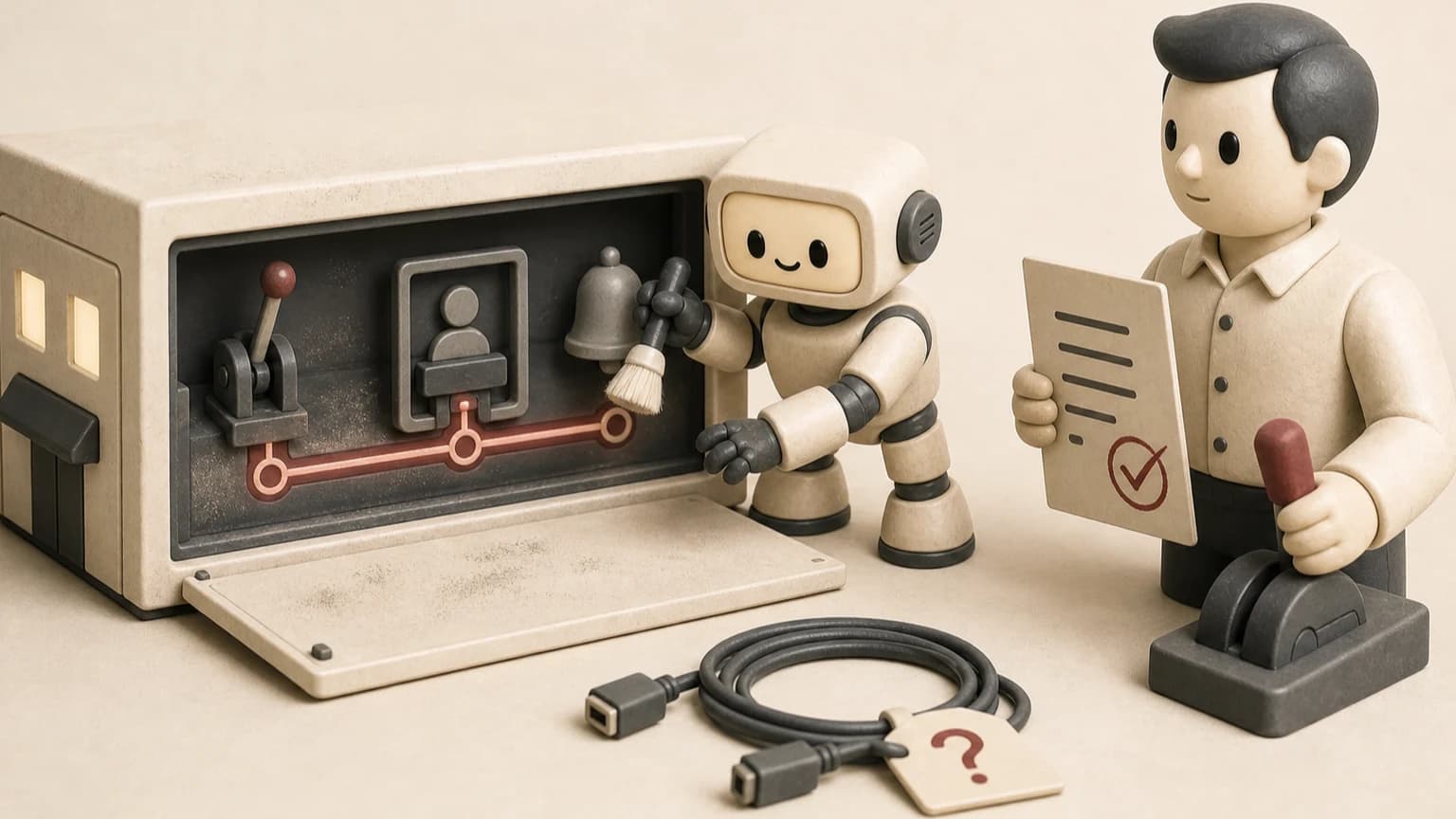
Existing tools first
Configuration and native workflow capabilities are evaluated before custom integration.
Human decision points
Approvals and irreversible actions stay with the person accountable for them.
Named workflow owner
The person who owns the business outcome also owns the path when it stops.
Build only when needed
A custom layer earns its place only when the native option cannot meet the written need.
Chapter 01
Map the work
Start with the process, not the tool
01
Inventory the manual loop
Identify the trigger, the actions someone repeats, the hidden exception, and the point where the work leaves one owner for another.02
Inspect native options
Review the licensed platform's templates, recurring settings, approvals, notifications, and available connectors before proposing a new tool.03
Choose the smallest durable change
Recommend configuration, a platform workflow, or a custom integration only after the limits and ownership are clear.
Zoevin’s automation service is new and has not delivered a client engagement yet. My experience comes from building automation in salaried in-house roles.
Chapter 02
Build the right path
A bounded workflow with an owner
01
Write the decision memo
Record what the current system can do, what it cannot, and why the recommended route is the least complicated honest answer.02
Configure or build
Implement the agreed workflow in your tenant, keeping credentials, licensing, and final control with your organization.03
Teach the owner
Walk the named owner through normal operation, known exceptions, changes, and the written rollback path.
Chapter 03
Prove and hand over
Acceptance is more than a happy path
The trigger is deliberate
The workflow starts from the intended event and ignores incomplete or irrelevant changes.The decision trail is visible
A person can see what ran, what stopped, and why an approval or exception was routed to them.The original process is recoverable
The workflow can be paused and the team can resume the documented manual method.
You receive the process map, decision memo, workflow export, access and secrets design, failure register, runbook, rollback, and handover record. See a fictional example of that artifact set.
Before we start
Know the boundaries
When this is the wrong buy
The desired outcome keeps changing
A moving policy or undefined exception rule should be settled before anyone configures automation around it.You want autonomous decisions
The work does not approve payments, release funds, sign agreements, or make people decisions.You need someone to run it indefinitely
The engagement ends at handover. Ongoing operation belongs with your internal owner and technology provider.
Next step
Bring the real workflow to a fit consult
Bring the systems involved, the person who does the work, and an example of an exception. The first answer may be a setting you already own. If mapping is worthwhile, the next step is a fixed-scope discovery.