Problem
The job is finished. The invoice hasn’t gone out.
To understand why, sit down with the people involved and follow one recent job through the work required to bill it. Ask them to show you the records, messages, and decisions they used.
You can turn that conversation into a process map: a picture of the steps, the people responsible, and the places where work waits or takes a different route. That picture gives you something concrete to discuss before changing the process or automating part of it.
The service business below is fictional. Its example shows how to conduct the walkthrough and build your first map.
1. Choose one invoice and set the boundaries
Pick a recent invoice that required some chasing. Have its job record, relevant messages, and invoice available. For this exercise, start when the field team marks the job complete. Finish when the office sends the approved invoice. Customer payment happens later and belongs in a separate investigation.
Invite the people who handled this example: the person completing the job record, the person preparing the invoice, and anyone whose decision was needed. Explain what you want to learn: “We’re following how this invoice got prepared and sent. I want to understand what information you needed, what you had to check, and what held things up.”
Give people room to explain why they work the way they do. A separate spreadsheet or an extra check may serve a purpose that becomes clear during the conversation.
2. Ask people to show you what happened
Start with a specific question: “Can you show me how you found out this job was ready to invoice?” Then follow the answer. Keep returning to the example when the conversation moves toward what usually happens or what the procedure says should happen.
In our fictional business, the interview might go like this:
An example conversation
You: How did you know the job was finished? Office coordinator: The technician marked it complete in the job system. You: What did you do next? Office coordinator: I opened the job and checked the hours and materials.
You: Was everything there on this one? Office coordinator: The hours were. There was also an extra part, but the receipt was in a text message. You: What happened once you found the receipt? Office coordinator: I asked the owner whether the extra charge had been agreed with the customer.
You: How did you get the answer? Office coordinator: The owner replied to my email. Then I could finish the draft invoice.
Follow the answer
Each answer supplies another step, source of information, or decision. Ask what makes a check necessary. If someone reviews every invoice, find out what they are looking for and what happens when they find a problem.
- What told you to start?
- Where did you find that information?
- What did you check it against?
- What happened when something was missing?
- Who could make the decision?
- How did you know it was time to continue?
- How could someone else tell this step was finished?
3. Record the work as you learn it
A simple table is enough to begin. Write down actions in the order they happened and name the role doing each one. Here is the record from our fictional example.
Keep a note of how you know each detail. “The coordinator remembers waiting until Tuesday” is different from “the approval email is dated Tuesday.” Mark uncertain details for follow-up.
Separate time spent doing the work from time spent waiting. Email timestamps may show when a question was sent and answered. They do not tell you how many minutes someone actively worked on it.
Examples
4. Turn the steps into a map the team can check
Use a box for an action, a question for a decision, and arrows to show what happens next. Include the responsible role in each action.
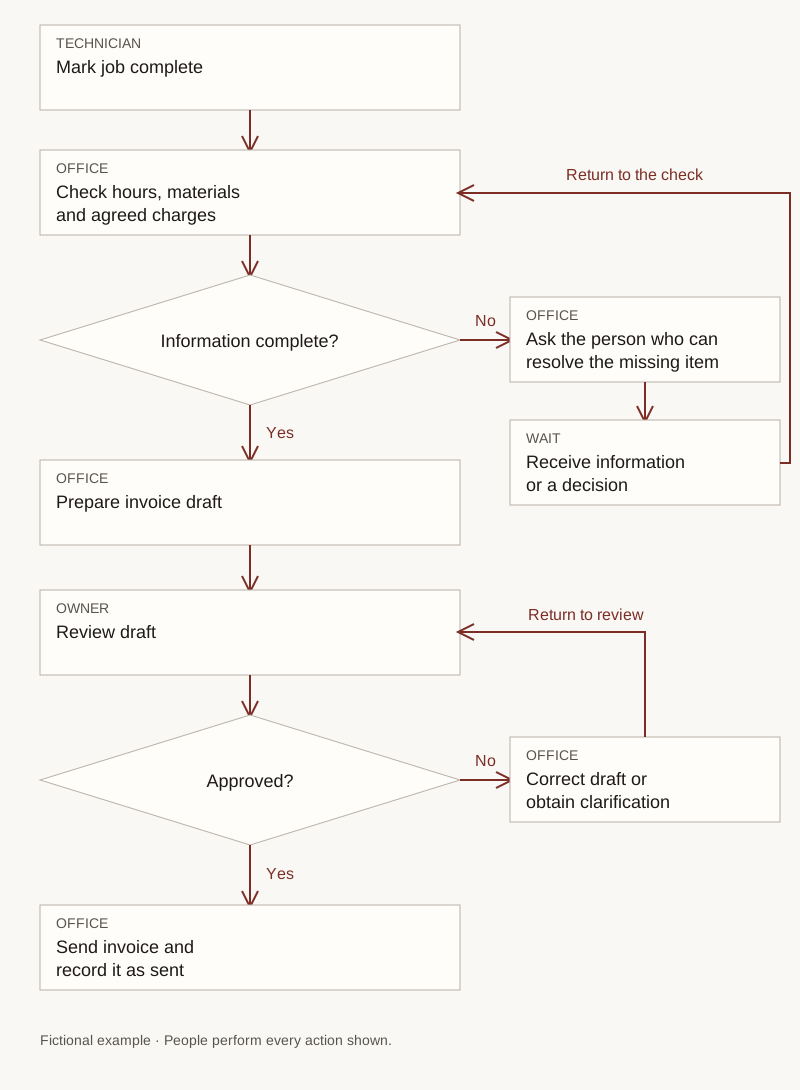
After asking what happens when the information is complete—and what happens when a draft needs correcting—the fictional workflow can be drawn like this.
Check it against the work
Walk through the map with the people who do the work. Ask: “Could you use this picture to explain what happened on that invoice? What have I missed?”
Then try a second example. Choose one that went smoothly or involved a different complication. Add a separate path where it changes the work.
If two people describe different sequences, record both and investigate when each applies. Keep your proposed improvements separate from the map of the current process.
From completed job to sent invoice
Fictional current-state process. Every action belongs to a person; this is a map of existing work, not an automation specification.
Read the process map as steps
- The technician marks the job complete. The office checks hours, materials, and agreed charges.
- If information is missing, the office asks the person who can resolve it, waits for the information or decision, then repeats the check.
- When information is complete, the office prepares an invoice draft and the owner reviews it.
- If the draft is not approved, the office corrects it or obtains clarification, then returns it to the owner for review.
- Only after approval does the office send the invoice and record it as sent.
Solutions
5. Use the map to decide what to improve
In this example, marking a job complete does not establish that every detail needed for billing is available. The office still has to gather information and obtain a decision. That finding opens several possibilities.
Test each idea with the team. Check what the existing software supports and which decisions need to remain with a person.
Establish a baseline
Before making a change, establish a baseline across several invoices: elapsed time from job completion to sending, active preparation time, missing-information requests, and corrections. Measure those same things afterward, including any new review or maintenance work.
One invoice helps you discover questions worth asking. Several examples help you judge whether the pattern is worth changing.
How Zoevin helps
Bring one invoice that took too much chasing
At Zoevin, I use that understanding to scope automation around the work your team actually does. Bring one recent invoice that took too much chasing, and we can discuss what held it up and what would be useful to examine.
- Describe the steps, information, and people involved.
- Discuss what held up the invoice and what would be useful to examine.
Zoevin has no delivered automation projects yet. Discovery names the seam. If I build, I hand it over on a written date. You get the workflow, the logins, and the write-up. I don't stay on to run it. You buy the software.
Evidence
Sources
Primary reporting first. Open the sources yourself rather than taking this account alone.
primary source
ASQ — FlowchartReviewed June 2025; accessed September 21, 2026. Background on defining process boundaries, sequencing activities, and reviewing a current-state map with participants. The interview, invoice records, diagram, and improvement options are Zoevin’s fictional teaching example, not ASQ findings or client results.